

Description
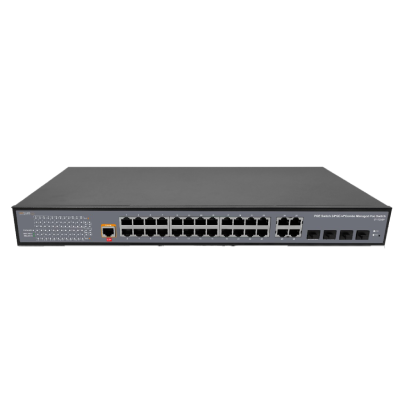
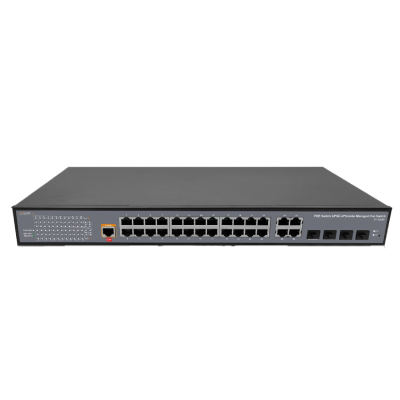
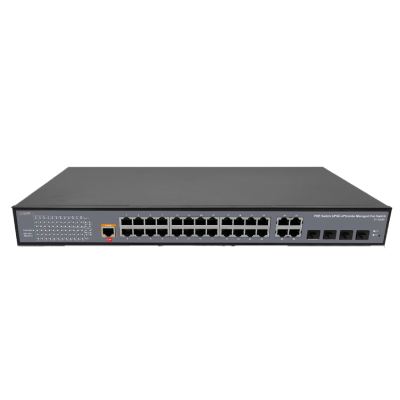
Port Count: As the name suggests, a 24-port PoE switch comes with 24 Ethernet ports, allowing you to connect up to 24 devices to the network. These ports may support various Ethernet speeds, such as 10/100/1000 Mbps (Gigabit Ethernet), depending on the specific model.
Power over Ethernet (PoE): One of the key features of a PoE switch is its ability to deliver power to connected devices over the Ethernet cables, eliminating the need for separate power adapters. This is particularly useful for devices such as IP cameras, wireless access points, VoIP phones, and IoT (Internet of Things) devices.
PoE Standards: PoE switches typically support various PoE standards, such as IEEE 802.3af, IEEE 802.3at (PoE+), and IEEE 802.3bt (Ultra PoE), which determine the maximum power that can be delivered to each port. PoE+ and Ultra PoE standards offer higher power budgets compared to standard PoE, allowing for the connection of more power-hungry devices.
Total Power Budget: The switch’s total power budget refers to the maximum amount of power it can provide to all connected PoE devices simultaneously. This is an important consideration when selecting a PoE switch, as it determines the number and type of devices that can be powered.
Managed vs. Unmanaged: PoE switches may be available in managed and unmanaged configurations. Managed switches offer advanced features such as VLAN support, QoS (Quality of Service), SNMP (Simple Network Management Protocol) monitoring, and port mirroring, providing greater control and flexibility over the network.
Rack Mountable: Many 24-port PoE switches are designed to be rack-mountable, allowing them to be installed in standard network equipment racks for centralized management and organization.
Compatibility: It’s essential to ensure compatibility between the PoE switch and the devices you intend to connect. This includes verifying the required PoE standards, power requirements, and Ethernet speeds supported by both the switch and the devices.


Reviews
There are no reviews yet.